
Blessings are the core of an Ember and Blade run. They come from angels, they stack into sets, and — the part that separates them from every other survivors-like — they attach to a specific action rather than firing on their own.
Demo 2.0 rebuilt the system from scratch. Anything written about Blessings before September 2026 describes a different game.
Five angels, one pool each
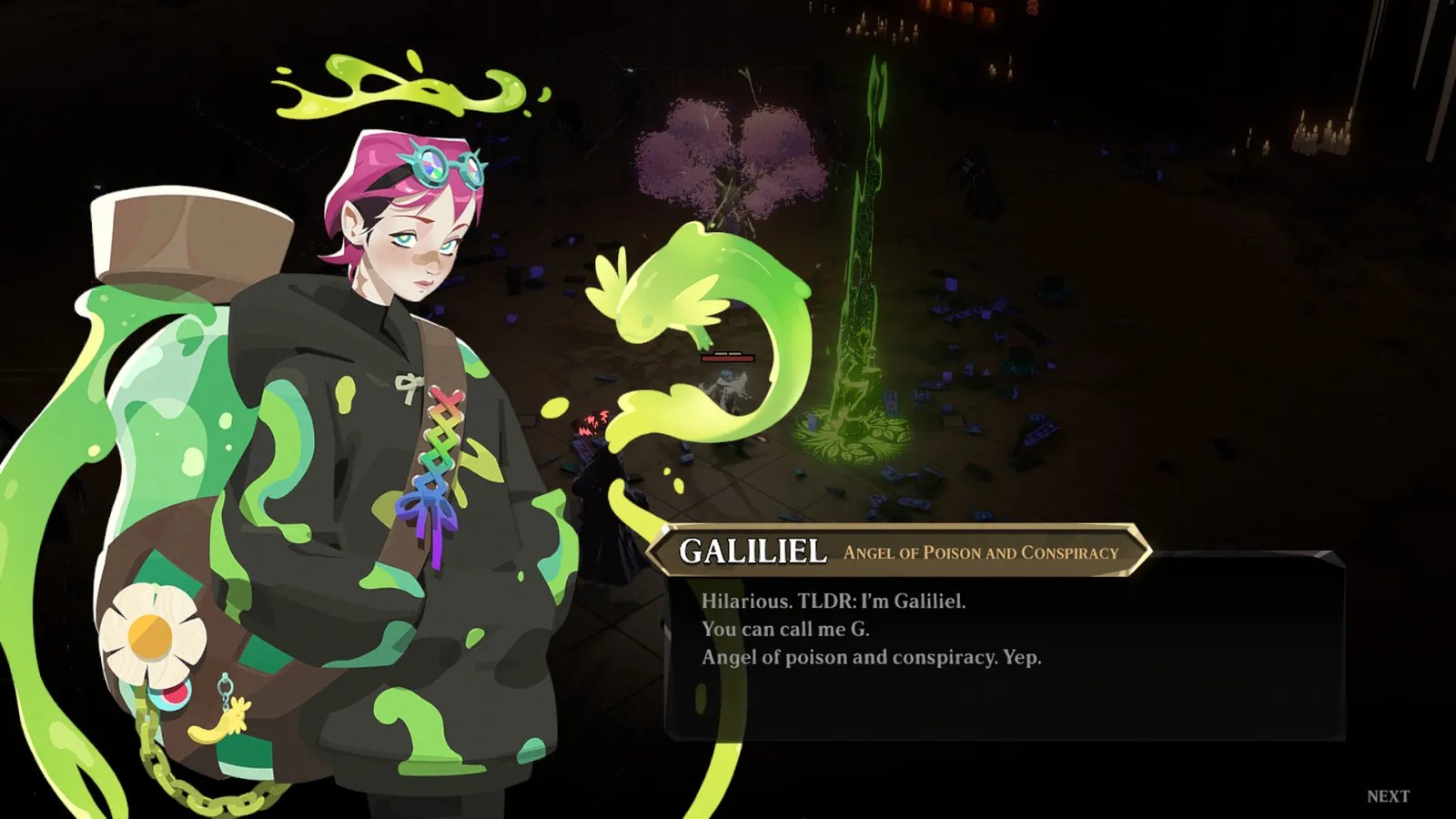
Five angels provide Blessings: Michael, Selaphiel, Uriel, Galiliel and Remiel. The first public demo had three angels and twelve Blessings; the current build spreads them across five, and Demo 2.1 gave each one a distinct visual identity by level and star rank.
Collecting Blessings from the same angel grants a set bonus, and the selection screen shows angel icons and synergy status so you can see what you are building toward before you commit.
 Official media
Blessing Links are the real decision
Elites appear at set points during a run and drop links. A link binds one of your Blessings to one of three actions:
- Light attack — the Blessing fires with your bread-and-butter swings, which is where most of your inputs already go.
- Heavy attack — fewer triggers, heavier payload, and it competes with your Break-gauge damage.
- Dash — the Blessing fires when you dodge, which is either the best or the worst slot depending on the Blessing.
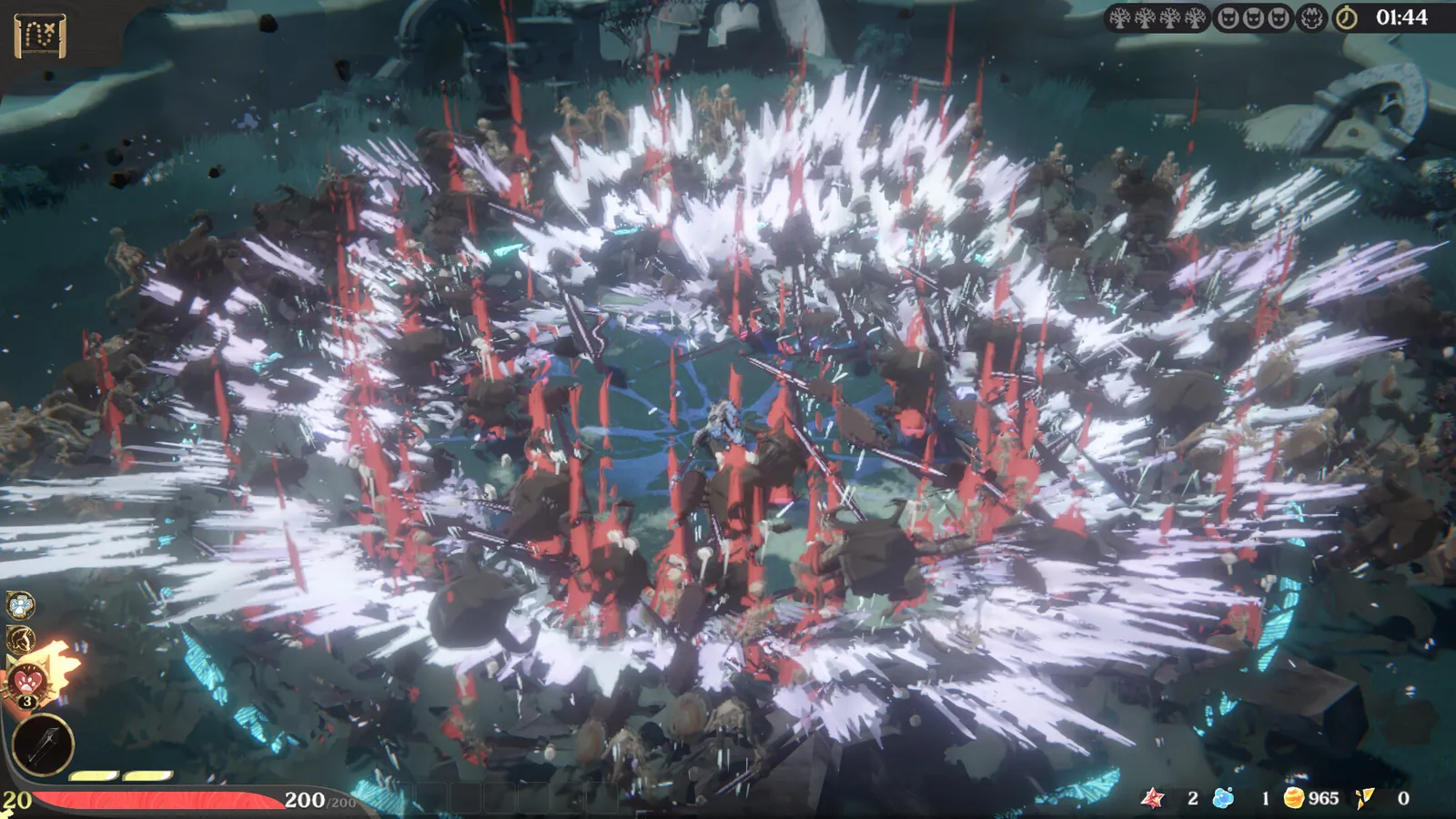
The same Blessing behaves differently in each slot: projectile pattern, projectile count and activation timing all change. That is why "which Blessing is best" is the wrong question — the right one is which Blessing belongs on which action for the fight in front of you.
Links are assigned on a dedicated screen. Unwanted links convert into EXP shards, and since Demo 2.1 that conversion pays out immediately rather than requiring you to pick the shards up.
Links come from elites, not from levels
If you skip elite fights, you skip the slots that make Blessings interesting. An elite that runs away with a link is worth chasing, even when the safer route is past it.
How sets change the pick
Angel sets grant bonus stats, and the selection screen shows which angels you already hold before you commit. That makes the second Blessing of a colour worth more than the first Blessing of a new one: a completed set is a multiplier on everything in it, while four partial sets are four small additions that never multiply.
The exception is a link slot that demands a specific behaviour. A dash link doing nothing for your build is worse than a broken set, because the slot is the part of the system you actually press. Read the slot first and the set second, and expect the two to conflict regularly — that conflict is the decision the system is asking you to make.
Star ranks
Blessings have star ranks up to three, and a three-star Blessing gets a unique hit effect on top of its stat line. Demo 2.1 also made the differences between ranks readable at a glance rather than only in the description.
Whether a three-star low-tier Blessing beats a one-star high-tier one depends on the link slot it lands in, which is why the star rank is a tiebreaker rather than a rule.
The Blessings named in official notes
LINE Games has not published a complete Blessing list. These are the ones named individually in patch notes and dev posts, which makes them the only ones that can be described with confidence:
| Blessing | Angel | What the notes establish |
|---|---|---|
| Radiant Edge | Michael | Has a link-specific behaviour; tuned in Demo 2.1 |
| Enduring Aegis | Michael | Defensive; link behaviour implemented in Demo 2.1 |
| Righteous Bladefall | Michael | Link behaviour implemented in Demo 2.1 |
| Celestial Ripper | Michael | Link behaviour implemented in Demo 2.1 |
| Love Flare | Not stated | Projectile Blessing; its projectiles were reworked in Demo 2.1 |
| Viral Toxicity | Not stated | Creates a ground field; reworked in Demo 2.1 |
| Rumbling Crescendo | Not stated | Has a heavy-attack link tied to the Hammer's charge attack |
Michael's four are the ones Demo 2.1 tuned link behaviour for, which suggests her pool is the most link-dependent of the five. Treat the empty cells as empty rather than as a guess: the game has not attached an angel to every named Blessing.
Practical order of operations
- Take the level-up choice that fits the weapon you are holding, not the one with the bigger number.
- When an elite drops a link, decide the slot before you open the assignment screen — deciding there costs you the fight's tempo.
- Let set bonuses happen. Chasing five angels at once produces five partial sets and no completed one.
 Official media
The EXP conversion
A link you do not want is not wasted: it converts into EXP shards, and since Demo 2.1 that conversion pays out immediately instead of asking you to collect the shards from the floor.
That change made the decision cheaper to reverse. Taking a link you are unsure about and converting it later costs a moment; before the patch it cost a detour mid-fight, which is why players hoarded links they never used.
What is still unknown
The full Blessing pool, the exact set bonuses per angel, and how Galiliel's and Remiel's pools differ from the three combat angels are all unpublished. Expect the list to grow when Early Access adds Acts 2 onwards.